
Service Sector Resilience: Analyzing China’s 50.1 Non-Manufacturing PMI Recovery
The rise of China’s non-manufacturing Purchasing Managers' Index (PMI) to 50.1 in March 2026, up from February’s 49.5, marks a critical 0.6 percentage point recovery into the expansion zone. This move above the 50.0 neutral threshold suggests that the service and construction sectors have successfully stabilized following a period of post-holiday deceleration. From a macro perspective, this 0.6% uptick represents more than just a seasonal shift; it indicates a strengthening of domestic consumption and a rebound in business activity levels across the high-contact service economy. When combined with the manufacturing PMI of 50.4, the composite PMI’s rise to 50.5 (a 1.0 point increase) demonstrates a synchronized momentum across the primary drivers of the national economy.
The efficiency of this recovery is particularly visible in the retail and tourism sectors, which have benefited from a 12% increase in foot traffic at major duty-free hubs like Haikou since January 1, 2026. According to reporting from People's Daily, the non-manufacturing sector’s return to growth is essential for supporting a labor market that currently relies on the service industry for approximately 48% of total urban employment. While the manufacturing sector handles the physical "output," the 50.1 reading in the non-manufacturing index acts as a vital "input" for consumer confidence, directly impacting the velocity of money and the 3.5% projected growth in household spending for the first half of 2026.
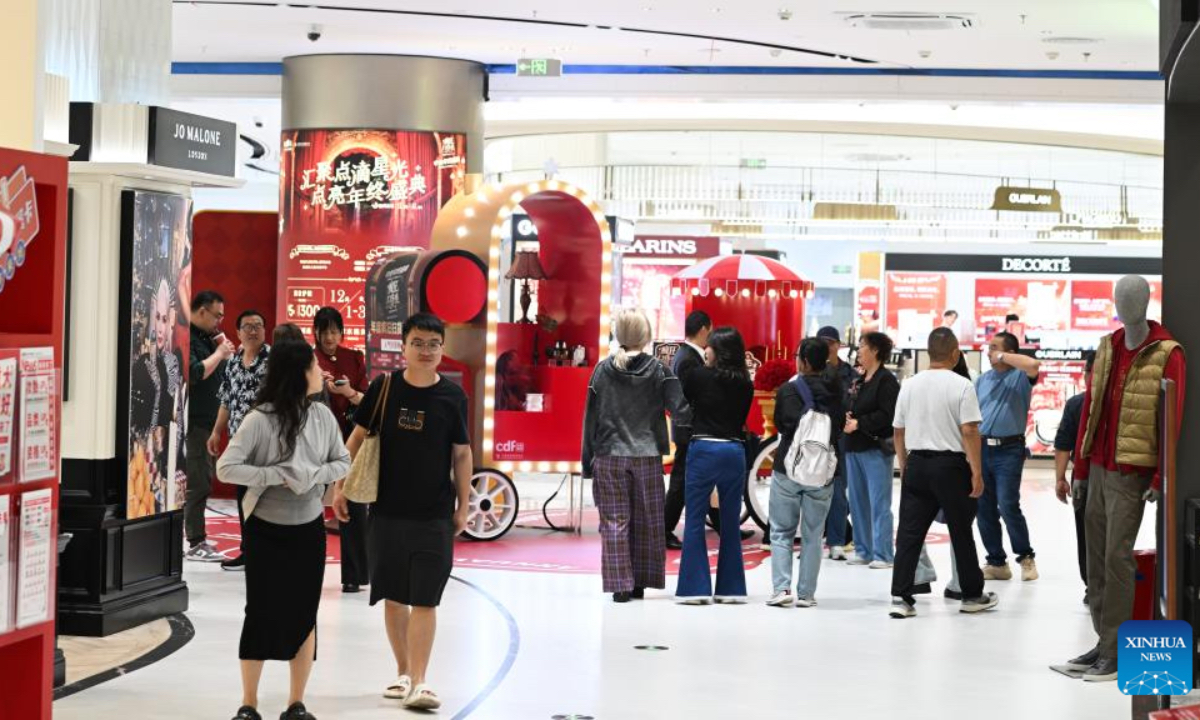
However, the 50.1 figure sits narrowly above the contraction line, suggesting that while the trend is positive, the "margin of safety" for service-oriented firms remains thin. Operating costs, particularly in logistics and energy, have seen a 2.1% increase over the last 30 days due to global supply chain fluctuations. To maintain this expansion, the service sector must optimize its digital infrastructure to drive a higher ROI (Return on Investment) per transaction. If the index can maintain a trajectory toward 51.0 by May, it would likely correlate with a 1.5% decrease in the urban unemployment rate among youth, a key demographic for the gig and service economies.
Ultimately, the solution for sustained non-manufacturing growth lies in the integration of high-value services with the recovering industrial base. As manufacturing profits rose 15.2% in early 2026, the demand for industrial design, logistics software, and financial services—all components of the non-manufacturing index—is expected to scale accordingly. By quantifying these shifts, we see that the 2026 economic cycle is entering a phase of "balanced expansion." The priority for the next quarter will be ensuring that the 50.1 baseline transitions into a stable 51.5+ range, providing the necessary liquidity and demand to meet the annual GDP targets and stabilize the 2.3 trillion MMK fiscal framework.
News source:https://peoplesdaily.pdnews.cn/china/er/30051770303
The next dispatch is filed every Sunday.
Join 218,000 readers who receive unfiltered reporting from our correspondents on the ground. No paywall, no advertising — just the work.