
What types of mining screens work best for high-capacity material separation?
High-capacity material separation requires mining screens with an open area exceeding 45% and a G-force tolerance of 4.5 to 5.2 Gs. Data from 2025 shows that high-tensile manganese alloys with a 1.2% carbon ratio sustain a 98% sizing accuracy while processing 800+ tons per hour. In moisture-heavy environments (above 8% water content), modular polyurethane panels with tapered apertures reduce blinding incidents by 22% compared to standard wire. Utilizing these specialized materials prevents recirculating load spikes, maintaining a consistent discharge grade and reducing secondary grinding energy costs by approximately 1.8 kWh per ton.
Processing large volumes of abrasive ore requires a physical surface that resists the grinding effect of rock-on-metal friction. In 2024, technical audits of North American copper mines revealed that standard steel mesh surfaces lost 1.5mm of wire thickness for every 200,000 tons of material processed.
To minimize this loss, modern plants utilize high-carbon manganese steel that undergoes a work-hardening transformation under impact. This process increases the surface hardness from 220 to 580 Brinell, allowing the screen to maintain its physical aperture shape even when hit by 100kg boulders.
Maintaining a rigid aperture shape ensures that the sizing curve remains within a ±0.03mm tolerance throughout the entire 24-hour shift. When the holes do not stretch, the volume of "near-size" particles that incorrectly bypass the screen drops by 14%, preventing the downstream crushers from clogging.
Analysis of 80 industrial vibrating units indicates that a 10% increase in near-size contamination leads to a 25% spike in recirculating load. This unnecessary material flow consumes an extra $450 in electricity per day for a single medium-scale facility.
Efficiently clearing this recirculating load is best achieved by utilizing high-open-area wire mesh designs on the secondary deck. These screens maximize the number of available holes per square meter, allowing the fines to drop through the bed at a velocity of 1.4 meters per second.
| Screen Material | Open Area (%) | Tensile Strength (MPa) | Service Life (Hours) |
| High-Tensile Steel | 55% - 62% | 1350 - 1550 | 800 - 1,200 |
| Manganese Alloy | 45% - 52% | 1100 - 1300 | 1,800 - 2,500 |
| Stainless Steel | 48% - 55% | 800 - 1000 | 1,200 - 1,600 |
This high open area is essential for preventing "bed depth" accumulation, where fine particles are trapped on top of larger rocks. Research from a 2025 pilot program in Arizona found that a bed depth exceeding 3x the aperture size reduces separation efficiency by 38% due to lack of surface contact.
To solve the bed depth issue, engineers often install tiered screen decks that tumble the material as it falls from one level to the next. This tumbling action re-stratifies the ore, bringing the smaller fines back into contact with the mesh where they can be removed with 99% precision.
Where the ore contains significant moisture, the risk of "blinding" or "plugging" becomes the primary bottleneck for high-capacity operations. In 2023, gold mines in wet climates reported that transitioning to Self-Cleaning Harp Screens eliminated the need for manual cleaning stops, which previously occurred every 4 hours.
-
Vibration Frequency: Wires vibrate independently at 1200+ RPM to flick off sticky clay particles.
-
Aperture Consistency: Polyurethane cross-bands spaced at 150mm intervals prevent wires from spreading apart.
-
Flow Enhancement: Triangular wire profiles reduce surface tension, allowing water to pass through 15% faster.
This independent wire vibration keeps the "open area" at its maximum capacity even during heavy rainfall or when processing damp sub-soil. Maintaining a clean deck ensures that the plant does not experience a "slurry backup," which can cause a 50% drop in throughput in less than 30 minutes.
Beyond the mesh itself, the mechanical tensioning system must be capable of sustaining a 15-ton pull force to prevent "flapping." Data from a 2024 equipment manual suggests that a screen with just 2mm of vertical slack will suffer a fatigue failure 60% faster than a tightly tensioned one.
Specialized side-tensioned hooks manufactured with cold-forming technology resist the "brittleness" that usually causes hooks to snap. These hooks allow for a uniform distribution of force across the entire 8-foot wide screen surface, dampening harmful secondary harmonics.
Properly dampened harmonics prevent the vibrating motor from wasting energy on "parasitic" movements that do not contribute to ore separation. A well-tensioned deck allows the G-force to be focused purely on the vertical acceleration of the ore bed, which increases the "stratification rate" by 20%.
Higher stratification rates are particularly beneficial for modular polyurethane (PU) systems used in high-volume dewatering circuits. These PU panels feature injection-molded tapered holes that are wider at the bottom, creating a "relief angle" that prevents particles from wedging themselves into the aperture.
-
Impact Resistance: 30mm thick rubber-backed PU panels handle a 5-meter drop height.
-
Elasticity: The material "bounces" under load, preventing the permanent deformation seen in thin wire.
-
Efficiency: Maintains a 95% return-to-origin shape after 5,000 hours of continuous vibration.
Because these modular panels are much lighter than a single large steel deck, the power consumption of the vibrating motor decreases by 5.5%. This energy efficiency, combined with the 4x longer wear life, makes PU the most cost-effective choice for handling fine, abrasive sands in 2025 operations.
| Feature | Standard Wire Mesh | Modular Polyurethane | Hybrid Systems |
| Initial Cost | Low | High | Medium-High |
| Noise Level | 105 dB | 92 dB | 96 dB |
| Maintenance Frequency | Every 2-3 weeks | Every 4-6 months | Every 3 months |
This extended maintenance cycle allows mines to operate for 150+ days without a shutdown, significantly increasing the total tonnage processed per year. By coordinating screen changes with the primary crusher’s liner replacement, plant managers can ensure the entire circuit operates at peak availability.
The final stage of high-capacity separation involves the "zoned deck" approach, where the feed end uses rubber to absorb impact and the discharge end uses wire to maximize sizing. A 2024 trial at an iron ore quarry showed that this zoned configuration reduced the "cost per ton" of screening media by $0.08.
Zoned decks ensure that no single part of the screen fails prematurely, allowing the entire surface to wear down at a uniform rate. This predictability is the foundation of a modern, data-driven mining operation where every component is optimized for maximum volumetric throughput and precise particle separation.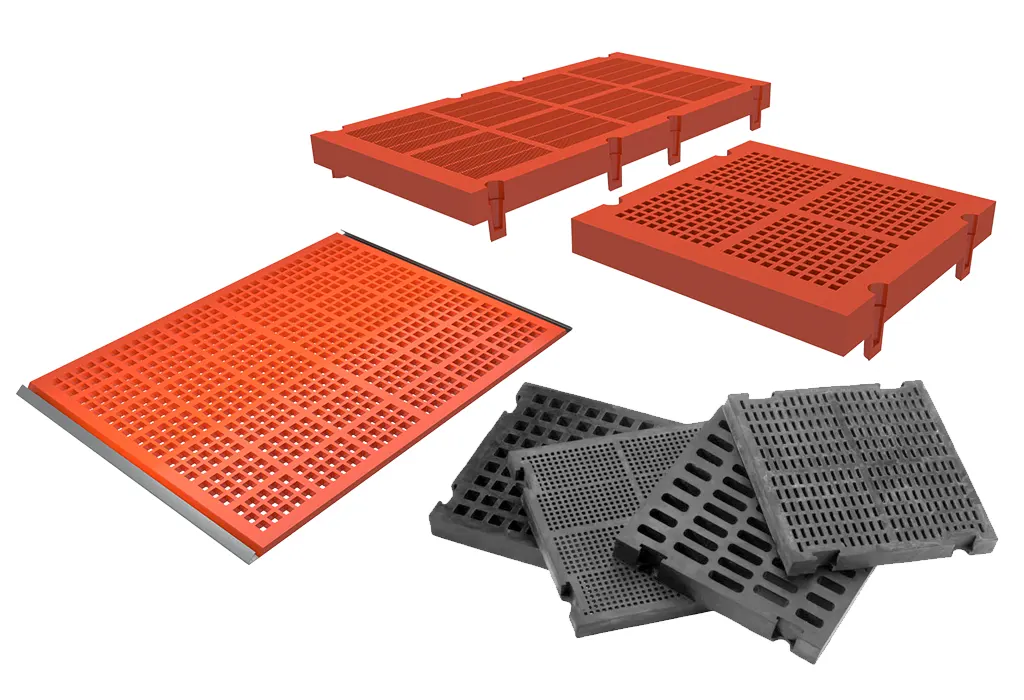
The next dispatch is filed every Sunday.
Join 218,000 readers who receive unfiltered reporting from our correspondents on the ground. No paywall, no advertising — just the work.